
The riskiest name on a sourcing list is usually the supplier who answers yes to everything. Cab programs don’t die of generic willingness. They die of a die that opens late, a connector customs refuses, a datum nobody ever agreed, a container that arrives blooming along its hem flanges. Fourteen questions, sorted into four categories, tell you within one email round which answers got volunteered and which had to be pulled out. The order below isn’t arbitrary either. It follows the order programs actually fail in, so capability comes first because tooling claims are the hardest to fake, then the calendar, then dimensional evidence, then the paperwork that governs a dispute eighteen months later.
Capability and Calendar: Can It Be Built, and When?
Does the Metal Actually Get Made There?
A broker and a plant look identical behind a trade-show booth, so the first five questions chase the metal itself.
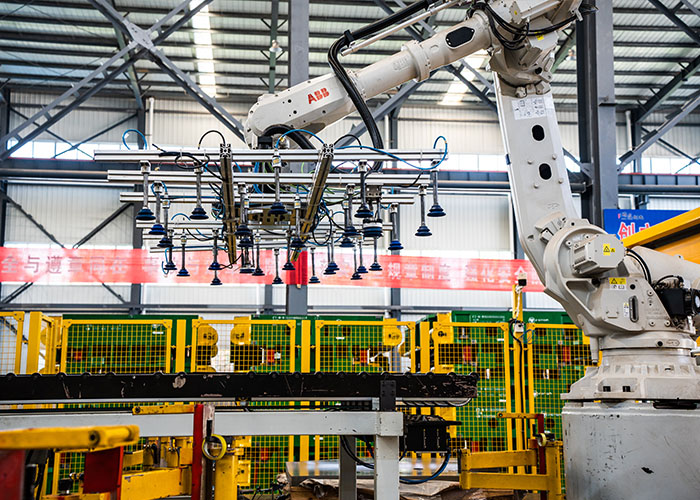
Which presses form the cab panels, and at what tonnage? Push for the press line, not the part photo. Multi-station transfer lines and large servo presses either exist on a shop floor or they don’t, and a supplier who sells stamped assemblies should run stamping and welding lines it can walk a visitor through without arranging anything first. Tairui’s welding shop runs 152 robots with automation at 85% and carries more than 400,000 stamping-and-welding sets a year of capacity. Claims that big fold neatly under a live video of the line, which takes ten minutes to request and a day to receive.
Who cuts the dies, and who maintains them afterwards? Ask to see a die maintenance log for a cab die currently running. A broker has nothing to show. A plant shows something boring, and boring is exactly what a healthy log looks like.
What automation share does the weld shop run, honestly? Manual shops will admit it if asked plainly. The number matters because robot share predicts how the plant behaves on the third shift, when nobody famous is visiting. Tairui’s reported welding defect rate fell from 5% to 0.8% after robotization, and that spread is worth holding against the peel-test records of any shop quoting manual numbers at the same price.
Who owns the tooling on a custom program, and what happens if production has to move? Which party holds title, where do the dies physically sit, what does the transfer clause say.
Which OEM programs does the plant support right now? Tairui’s cab work lives in its special vehicle segment and has fed programs including the HOWO Commander T3 and the Dongfeng Tianlong KL. The company entered FOTON’s supporting system back in 2004, Sinotruk’s in 2009, and kept adding names after that, Shaanxi Auto among them. A current program list is one phone call away from being checked, which is the point of asking for it.
What the Dates Actually Mean
Delivery promises are where optimism sneaks into a contract, so the calendar questions exist to catch it early.
Ask what the design cycle runs from customer concept to released drawings, and listen for a split. Tairui quotes 7 to 10 days for a design plan on customized projects, then 1 to 3 months for mold development, then roughly a month more to mass production. Suppliers who can’t split those stages apart have usually never sequenced them.
How many trial builds sit between die tryout and production? Every tryout teaches something, and the follow-up worth asking is what the R&D group validates before a die gets released at all, since simulation habits upstream buy back tryout rounds downstream. Digital-twin work in Tairui’s mold center compressed prototype verification on replica body panels from three months to 72 hours. Same discipline, and it changes how many attempts a cab die needs before the plate is finished.
Then the money question wearing a calendar costume: what happens to delivery when steel prices move? Long-term mill agreements are what separated the suppliers who absorbed the 2023 raw-material wave from the ones who came back mid-program wanting renegotiation.
Evidence: Datums, Defects, and Who Watches the Line
Three questions in this section outweigh every commercial clause further down the page.
Which datums control the cab, and can somebody show a dimensional report from three consecutive builds? Golden samples flatter everybody; three consecutive reports show whether the fixture process repeats on an ordinary Tuesday. On a cab, the two reference families that matter are the chassis mounting points and the hinge and striker lines, and everything else stacks off those. Tairui published its own engineering note on cab body in white dimensional checks before paint, which doubles as a test of whether a supplier reads its own process documents before the audit.
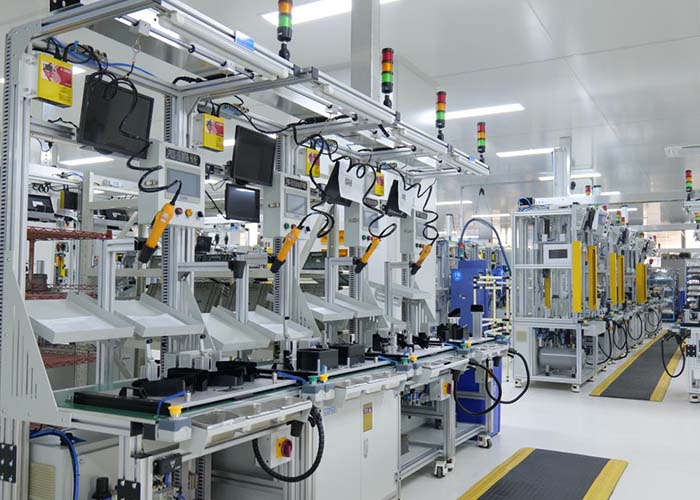
What metrology exists in-house, and to what accuracy? A real answer contains a number. Tairui measures inside a CNAS-CL01 accredited center with Hexagon coordinate measuring machines at ±0.02 mm in the mold center, blue-light 3D scanning, 60-some devices across seven test categories, and a quality department of over 70 inspectors. Certifications on paper are ISO 9001, IATF 16949, VDA 6.1/6.3 audits. The certificate list is table stakes at this level. The headcount behind it decides whether those certificates stay true on a Friday night.
What share of finished cabs sees a water test and an electrical check, and is the record filed per serial or per lot? Suppliers who actually have a sampling plan will write it down when asked, and the time the answer takes is itself a reading.
One more, easy to skip and expensive to skip: which quality instruments does the receiving department really use? The five core tools behind IATF practice, APQP, PPAP, FMEA, SPC, MSA, either run daily somewhere in the factory or they decorate a corridor wall. Ask which department produced last month’s SPC chart, and the answer identifies a room with people in it.
Paperwork: The Questions Buyers Remember After the Damage
The last stretch is the least glamorous and, on the day something breaks, the only stretch that matters.
What exactly ships in the delivery file? At Tairui the baseline runs to a certificate of origin, an inspection report carrying salt spray and spectral data, and a packing list. As a general rule, whatever a supplier can rattle off without pausing, it can produce. Customs reads these files too, so the item names have to match the declaration exactly.
Then the claim window and the evidence that opens one. Tairui accepts quality claims within 15 days of receipt against a third-party inspection report, a spectral deviation beyond 5% or weld strength below spec being the kind of finding that qualifies. Mis-delivery runs on a 48-hour feedback clock. Warranty covers non-human damage for a year, and an unauthorized circuit modification voids it, which surprises exactly one person in every dispute. Mind the geography though: a specialized cab on a dedicated land route still eats 15 to 22 days door to door, so most of that 15-day window is spent before anyone could plausibly book an inspection. The third-party inspection has to sit in the receiving plan before the order ships, priced and scheduled, rather than being improvised at the container. Shandong Tairui’s contact page takes a specific program outline with the datum drawing attached, which is also a decent filter for how engineering will read the rest of the file.
Conclusion
Sorted by the order a program fails, fourteen plain questions tell a buyer more than any audit checklist scored in green ink. Capability questions expose the broker. Calendar questions expose the optimist. Evidence questions expose the trader trading on somebody else’s certificates. Commercial questions stand guard on the ugly day the claim gets filed. A supplier who walks through all fourteen with numbers and named documents has earned a factory visit, and honestly the Profil de l'entreprise of whoever reaches the shortlist deserves reading before the flight gets booked rather than after the handshake.
FAQ (questions fréquentes)
Should all fourteen questions go in the first email?
Some of them, not all. The five capability questions plus the datum question belong in round one, because a supplier who handles those well is worth traveling for and one who evades them isn’t. The rest sort themselves out during the visit or in the contract draft.
Does a supplier audit replace these questions?
An audit checks answers that already exist. The email round exists to decide whose answers deserve checking, since presses, dies and robot counts verify remotely through a video walk and a few document names.
How do dealer terms compare with direct OEM cooperation?
Different buyers, different models. Tairui runs a dealer track with regional protection and quarterly rebates for aftermarket volume, and an OEM track with free tooling and synchronized development for manufacturer programs. Who owns the design decides which track fits.