Welcome to 2026, where the role of the commercial vehicle has changed completely. Fleet managers considered them as an expense that depletes value with time; this is history now.
The reality introduced by the heavy-duty electrification of the fleet is the presence of “energy nodes on wheels” in the form of batteries on wheels as part of the smart city infrastructure. This is made possible because of the maturity of the Vehicle to Grid (V2G) solution, from pilot to mainstay. With fluctuating energy demand and the rise of decentralized energy production, the role of the vehicles is no longer limited to total cost of ownership but to generating revenue.
It takes a different kind of partner, however, to successfully operate in such a landscape—one which has its roots in the heavy industry and is fueled by innovation in the energy sector. This is because, to appreciate the fact that the sanitation truck has to be tough and dependable first and foremost, and then become a source of energy, you need the expertise of people who specialize in the intersection of the two mentioned fields.
Decoding V2G for Commercial Fleets
To maximize the value of your fleet, you must first grasp the mechanics of bidirectional charging. In simple terms, traditional electric vehicle charging is a one-way street: power flows from the grid into the vehicle’s battery.
V2G technology opens that street to two-way traffic. It allows bidirectional charging EVs to take energy during off-peak hours when electricity is cheap and abundant, store it, and then push it back to the grid—or directly to a building or equipment—during peak hours when demand and prices are high.
While passenger EVs receive much of the V2G media attention, the real power lies in the commercial sector. Why? Capacity and predictability. A specialized sanitation vehicle or a heavy-duty sprinkler truck carries a battery pack significantly larger than any consumer car. Furthermore, these vehicles often operate on highly predictable schedules. You know exactly when a garbage truck will be finishing its shift and returning to the depot. This predictability makes commercial fleets the ideal stabilizing force for local power grids, allowing you to monetize dwell time that used to be pure cost.
Real-World Applications: Your Fleet as an Energy Asset
The theory is sound, but how does this translate to daily operations on the ground? By integrating V2G-capable special vehicles into your fleet, you unlock versatile power solutions that serve both your immediate operational needs and the wider community.
Powering Municipalities: The Electric Sanitation Advantage
Consider the daily cycle of urban waste management. Your vehicles are out working hard in the early morning, but they often spend significant portion of the day and evening parked at the depot.
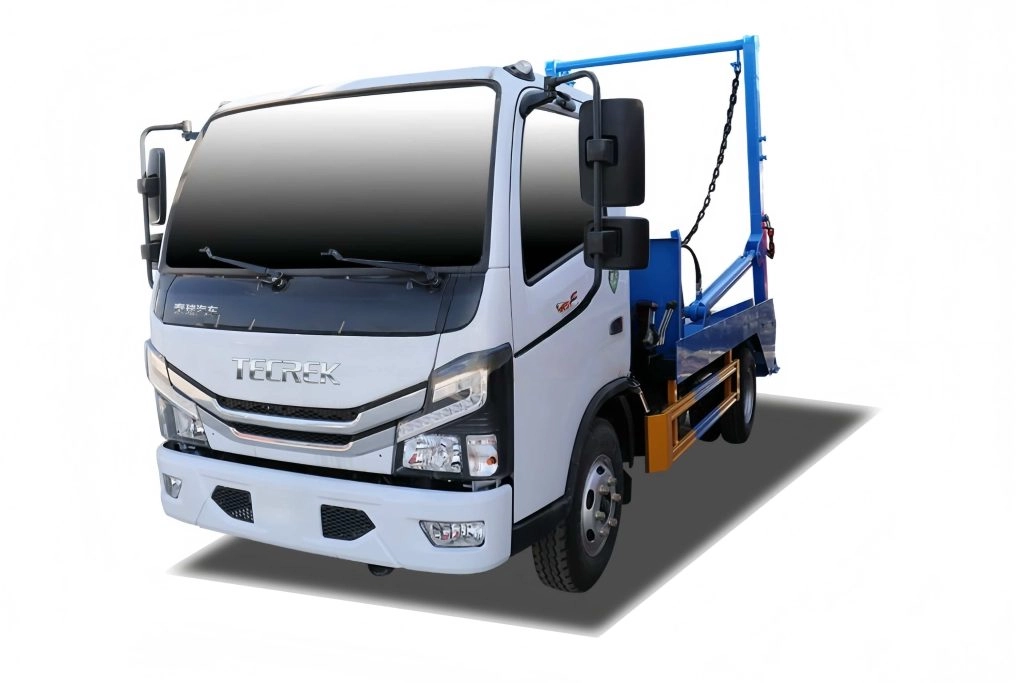
In a V2G ecosystem, a vehicle like the 국가 VI 스국 팔 쓰레기 트럭 transforms during these resting hours. After completing its primary duty of efficient, powerful waste collection, it returns to base. Instead of just sitting idle, it plugs into a bidirectional charger. If grid demand spikes in the late afternoon—perhaps due to a heatwave driving up air conditioning use—your parked truck can discharge its stored energy back into the municipal grid.
You are effectively renting your battery storage to the utility company. This process not only offsets your own charging costs but can generate a new revenue stream for your municipality or private contracting firm. The robust chassis and powerful lifting mechanisms crucial for its day job mean the vehicle is built to handle the thermal and electrical loads of energy transfer without breaking a sweat.
Electrifying Remote Operations: The Mobile Site Powerhouse
Beyond grid interaction, special vehicles act as standalone power plants for remote operations (often called Vehicle-to-Load or V2L).
Construction sites, new landscaping projects, or temporary roadwork zones frequently lack immediate access to the electrical grid. Historically, this meant hauling around loud, polluting diesel generators to run lighting rigs, power tools, or auxiliary equipment.
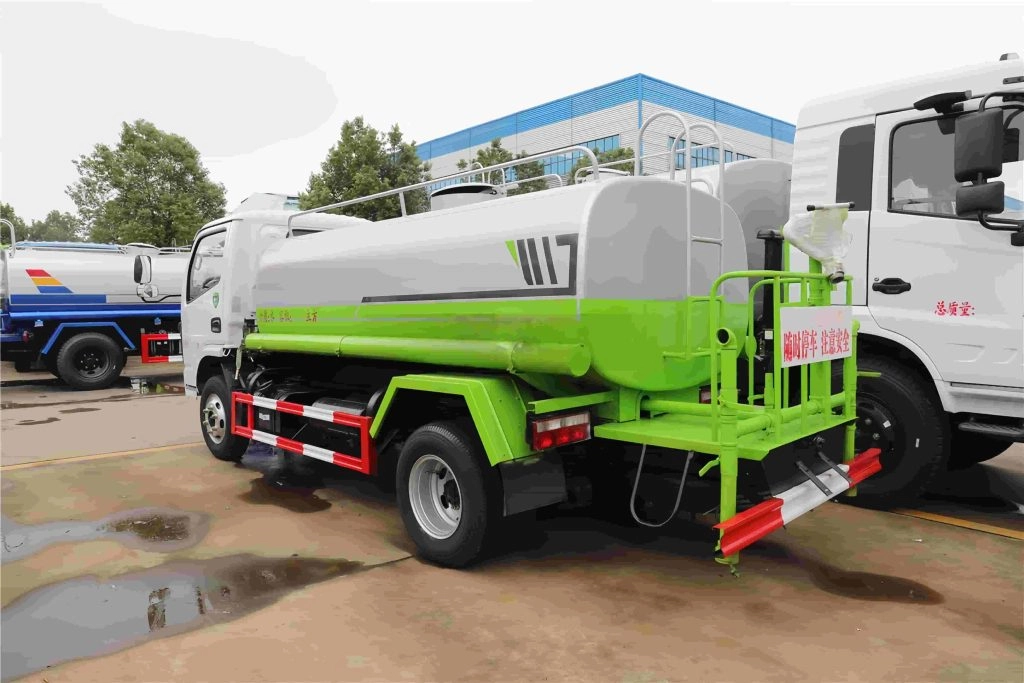
Now, your 고압 물 스프린클러 트럭, designed initially for dust control and road cleaning, becomes the site’s clean energy hub. Its massive onboard battery, necessary for driving high-powered water pumps, can be tapped to run essential site equipment. You eliminate the fuel costs, noise complaints, and emissions associated with portable generators. Your sprinkler truck suppresses dust during the day and lights up the worksite at night, delivering value around the clock.
Key Advantages of a V2G-Enabled Heavy-Duty Fleet
Adopting V2G isn’t just about having the right software; it requires vehicles built on a foundation of uncompromising quality. The stress of bidirectional energy transfer demands more than a standard EV platform.
The primary advantage of utilizing purpose-built special vehicles for V2G lies in their inherent durability. Vehicles engineered to meet stringent standards, such as the National VI criteria, are constructed with robust chassis and heavy-duty components designed for grueling industrial work cycles. This mechanical fortitude translates directly to electrical resilience. The thermal management systems designed to keep a truck cool while hauling heavy loads up steep grades are equally adept at managing battery temperatures during high-power discharge cycles.
Furthermore, these advanced vehicles come equipped with smart fleet management integration. You are not left guessing about battery health. Sophisticated onboard telematics ensure that V2G operations never compromise the vehicle’s primary mission. The system always prioritizes having enough charge for the next day’s route, only making the “excess” energy available for grid services.
Beyond the Daily Grind: Emergency and Event Power
The versatility of a V2G-enabled special fleet extends far beyond daily economic benefits. These vehicles become critical assets in municipal emergency preparedness and community support strategies.
In situations where natural disasters strike, causing disruptions in the main power grid, the fleet becomes a mobile emergency power reserve. A limited number of specially charged vehicles can be sent out to power critical infrastructure such as emergency field hospitals, command centers, and shelters. This becomes a lifeline in situations where power cannot be generated.
In relation to organized but temporary activities such as outdoor festivals, sports marathons, or pop-up markets, such trucks provide clean, quiet energy. Instead of using multiple scattered diesel-powered generators that produce pollution in densely populated areas, it is feasible to place electric vehicles in strategic locations to provide energy for lighting, audio systems, and vending booths.
Partnering for the Future: Service and Support
Transitioning to a V2G-enabled fleet is a significant step forward, moving past simple vehicle acquisition into the realm of energy management. This transition requires more than just a sales transaction; it demands an ongoing partnership with experts who understand both the mechanics of special vehicles and the complexities of grid integration.
Reliable support is crucial. You need assurance that the intricate systems governing bidirectional energy flow are monitored and maintained correctly. A true partner provides the necessary technical backing to ensure seamless integration with your depot’s charging infrastructure and offers customization options to match battery capacities with your specific industrial energy needs. As we move deeper into 2026, the successful fleets will be those backed by manufacturers like 산동 TaiRui who commit to service long after the initial sale. Their expertise ensures that as grid standards evolve and battery technologies advance, your fleet remains at the cutting edge of the energy revolution.
FAQ는
Q: Will using V2G frequently degrade the battery life of my special vehicles faster?
A: Modern battery management systems are incredibly sophisticated. They are designed to set strict limits on discharge depth and manage thermal loads carefully during V2G operations. By only utilizing the “top” portion of the battery’s capacity for grid services and ensuring smart thermal management, the impact on long-term battery health is minimal and often outweighed by the economic benefits.
Q: Do I need special infrastructure at my depot to use V2G capabilities?
A: Yes. Standard EV chargers are typically unidirectional (grid-to-vehicle). To enable V2G, you need to install bidirectional DC chargers that can handle the two-way flow of power and communicate with the grid. While this is an initial investment, various government incentives and long-term energy savings often provide a strong return on investment.
Q: Can a special vehicle like a sprinkler truck really power heavy construction equipment?
A: Absolutely. The battery packs required to move a heavy truck and operate high-pressure industrial pumps carry immense amounts of energy. Through high-voltage DC output or integrated high-power AC inverters, these vehicles can easily run heavy-duty power tools, site lighting rigs, and other auxiliary equipment that would otherwise require a large diesel generator.