
The previous competition focused on range, price, and specifications has now evolved into a competition centered around integrated mobility ecosystems, software-driven services, supply chain resilience, and lifecycle support.
1. Why the Shift from “Product Race” to “Ecosystem War”
1.1 Maturity and saturation of core EV technology
In the early days of the EV boom, automakers competed mainly on vehicle specs — battery size, range, price, and “first-generation” functionality. As battery technology stabilized and costs dropped, those metrics became table stakes. The result: differentiation by specs alone becomes harder — many EVs now offer similar range, performance, and features. This leads the industry to look beyond raw hardware.
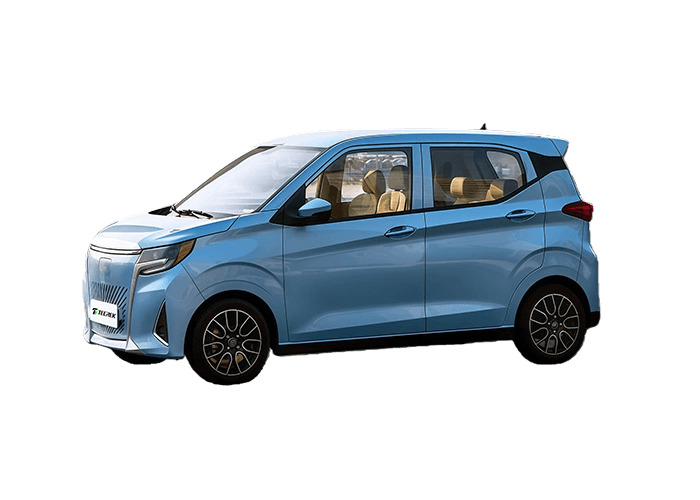
As one recent analysis of the Chinese market puts it, the automobile industry is reconstructing its boundaries:represented by the Long Range Mini Electric Car model, battery, hardware, software, charging infrastructure, supply-chain services and user support are merging into a complete “automotive ecosystem.”
1.2 Rise of software, connectivity, and services as value differentiators
Modern consumers and fleet operators care not just about how far a car can go, but how smart it is — including charging management, energy optimization, remote diagnostics, over-the-air updates, and integrated energy/fuel-service networks. This “value beyond the vehicle” transforms the car from a product into a platform.
In this environment, ecosystems matter more than specs. Automakers that control not only car manufacturing but also supply-chain, battery lifecycle, charging infrastructure, telematics and after-sales services hold a strategic advantage.
1.3 Pressure on margins and need for scale & integration
As competition intensifies and price wars (on hardware) become unsustainable, many automakers realize that cutting price alone erodes long-term viability. Instead, profit and survival depend on vertical integration, supply-chain stability, and providing a full-service ecosystem to users. As some industry experts warn, unchecked price-based competition (“price war”) can undermine quality and the long-term health of the industry.
For companies like Tairui, which build EV platforms and subsystems, this means success depends not just on building good cars — but constructing a robust ecosystem around them.
2. What “Ecosystem War” Entails — From Powertrain to After-Sales
2.1 Modular, flexible vehicle platforms as foundation
In the ecosystem approach, the design of vehicles is not as one-off products, but as modular platforms: capable of supporting various power systems (pure electric, hybrid, range extender), accommodating different battery chemistries, and enabling easy upgrades or component replacements.
Tairui emphasizes modular architecture that can adapt to evolving energy solutions — giving flexibility not only for different markets, but for future changes (battery upgrades, infrastructure upgrades, regulation changes).
2.2 Digital services, user experience, and vehicle-as-service (VaaS) models
Apart from the hardware, digital functions have also become a differentiating factor: real-time energy efficiency monitoring, predictive maintenance, remote updates, intelligent route/charging planning, fleet management tools for commercial users, and subscription or leasing models.
These services have transformed the business model: customers no longer simply purchase a car, but subscribe to an ecosystem that encompasses transportation, energy, and services.
2.3 Supply-chain integration and strategic partnerships
The competition within the ecosystem also involves the overall strength of the supply chain – stable raw material supply, high-quality components, diversified procurement channels, as well as close partnerships with battery suppliers, charging station operators, grid operators, and software suppliers. Enterprises that can establish these alliances can ensure reliability, cost control, and long-term sustainable development.
3. What Tairui is Doing — Building Its Ecosystem Strategy
3.1 Flexible platform design to support multiple energy strategies
By combining chassis, battery interface, wiring harnesses and body layout in a modular fashion, Tairui ensures scalability and adaptability across different markets and regulatory environments.
3.2 Embedding digital services, connectivity, and user-centric value propositions
Tairui’s roadmap includes integrated vehicle software, remote management, predictive maintenance, energy-use analytics, and charging/fuel-service partnerships. By offering mobility not just as a product but as a continuous service, Tairui addresses evolving customer expectations.
3.3 Supporting fleet and commercial adoption with lifecycle value and efficiency
For fleet operators and commercial customers — segments that determine volume adoption — Tairui emphasizes total cost of ownership (TCO), reliability, and maintenance predictability. Combined with modular design, energy efficiency, and after-sales support, Tairui’s ecosystem-oriented strategy meets the real needs of enterprise and logistics users.
4. Why the Shift to Ecosystem Competition Matters — Broad Industry Impacts
4.1 Differentiated value becomes the new competitive edge
In a mature EV market, spec-based competition becomes commoditized. Differentiation will come from ecosystem depth: how well a company integrates supply chain, energy, services, support, upgrade paths, and user experience. Firms that master the ecosystem will lead — not those who only chase specs or price.
4.2 Industry consolidation and rise of platform and service providers
As the ecosystem takes center stage, the landscape has changed: platform providers, battery and energy service providers, software and telematics integrators, and charging infrastructure operators – these players have become as important (or even more important) as traditional car manufacturers. This will redistribute the value within the supply chain and reshape the competitive landscape.
Conclusion
The observation The Competition of New-Energy Vehicles Has Shifted from Product Race to Ecosystem War captures a fundamental transformation in the automotive world. For companies like Tairui, success no longer depends solely on building a “good car.” It depends on building a comprehensive, flexible, future-ready ecosystem — from modular platforms and energy supply chains to digital services, lifecycle management, and flexible business models.
As the Long Range Mini Electric Car industry matures, those who win will not just build vehicles — they will build mobility ecosystems. Tairui is committed to leading in this new era, combining engineering, supply-chain strategy, and user-centric services to deliver long-term value and sustainable mobility.