
Why EVs Advertised as 100 km Range Often Only Do 60 km: Four Main Causes Explained — this phenomenon is familiar to many EV owners. From the vantage point of Tairui, understanding the gap between advertised range and real-world performance is critical for designing reliable electric vehicles, setting realistic expectations, and building trust with customers.
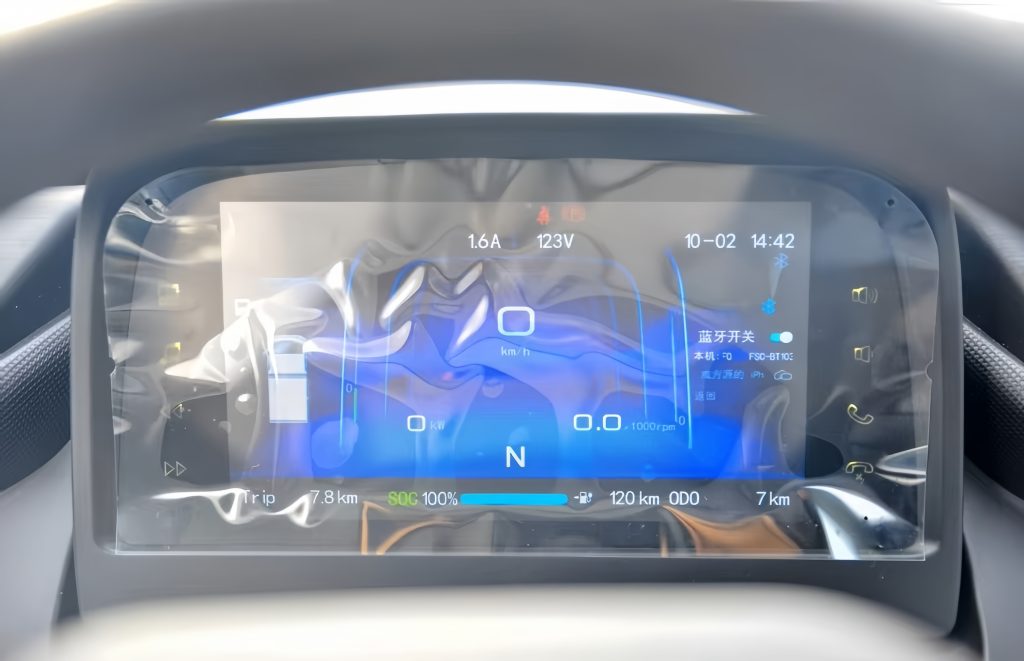
1. Lab Ratings vs Real-World Conditions — The Root of the Gap
1.1 Testing standards don’t reflect actual usage
Many manufacturers use idealized test cycles under controlled conditions — constant speed, no hills, no heating or air-conditioning, moderate temperature, light load — to generate “100 km” range claims. Under such benign conditions, energy consumption is minimal and range looks generous. However, when a driver hits real roads — with acceleration, braking, traffic lights, varying terrain, weather, and accessories — range drops significantly. Industry observers have noted that “under real-use conditions the theoretical range often cannot be met.”
1.2 Environmental and usage factors matter
Temperature, terrain, speed, load, and usage habits all affect actual energy consumption. Cold or hot weather reduces battery efficiency; frequent acceleration, heavy loads, or uphill driving demand more energy. Running heaters, air-conditioning, or heavy electrical accessories drains battery further. These real-world factors are why EVs rated for 100 km may only deliver 60 km or less in daily use.
1.3 Battery degradation and capacity drop
Over time, battery capacity degrades due to natural chemical aging, usage cycles, and temperature stress. A fresh EV pack might closely approach nominal range under ideal conditions — but as the battery ages, the effective capacity shrinks, leading to noticeably shorter real-world range. Many consumers report that a vehicle which once managed 100 km now struggles for 60 km — matching what older owners of EVs experience.
2. Why Many EV Makers Still Advertise “100 km” or More — And What That Means
2.1 Marketing appeal and competitive positioning
Range remains a key selling point. Advertised numbers help differentiate models, attract customers, and meet buyer expectations. Especially for entry-level EVs, a “100 km range” classifies them as suitable for city commuting and short-distance trips. However, such numbers often rely on ideal lab tests — not realistic road conditions.
2.2 The “badge range” becomes a benchmark, not a guarantee
Consumers often interpret the advertised range as what they can expect daily, but what they get depends heavily on driving style, environment, and maintenance. The discrepancy between “claimed cruising radius” and actual usable range causes frustration and erodes trust. Tairui views this as a systemic issue — not just an engineering challenge but a communication and expectation-management challenge.
3. How Tairui Addresses the “Range Gap” in EV Design
3.1 Realistic range forecasting and transparency
At Tairui, we believe in giving customers a realistic estimate of what they can expect under everyday driving conditions. We factor in typical use cases: urban traffic, frequent stops, accessory usage (AC, heating), weather variation, and typical load — then test vehicles accordingly, providing a “real-world range estimate.” This honest approach helps avoid the mismatch between expectation and reality.
3.2 Battery quality, capacity and management systems
Tairui invests in high-quality battery cells and robust battery-management systems (BMS) optimized for durability, thermal stability, and energy efficiency. By controlling internal temperature, monitoring state-of-charge carefully, and using conservative capacity margins, we reduce performance degradation. This helps vehicles maintain usable range closer to rated capacity over time, reducing the risk that “100 km” becomes effectively “60 km.”
3.3 Energy-efficient vehicle design and light-weight architecture
Beyond the battery, Tairui focuses on efficient powertrain design, aerodynamics, rolling resistance, and light-weight construction to reduce energy consumption per kilometer. By optimizing the entire vehicle system, we maximize the usable driving range under real conditions — helping bridge the gap between the ideal and the actual.
3.4 Customer education and recommended usage practices
Tairui provides owners with guidelines for efficient driving: smooth acceleration, moderate speeds, judicious use of heating/air-conditioning, proper tire pressures, and planning trips according to battery capacity. Educated users tend to extract significantly more real-world range than uninformed ones — closing some of the discrepancy.
4. What Buyers and Users Should Know — Practical Advice
4.1 Understand the “real-world range envelope”
When evaluating EVs, consider not just the “100 km” badge, but how you will actually drive: commute distance, terrain, accessory use, climate — all impact real consumption. Use published efficiency data or independent reviews rather than marketing claims alone.
4.2 Expect range degradation over time
Battery aging is normal. If you plan for 5–8 years of ownership, realize that your first-year 100 km may drop to 80-70 km after a few years — or lower under heavy use.
4.3 Plan for buffer and margin
Always leave a “safety margin” — don’t count on draining the pack fully. Especially in temperate seasons or when using heating/cooling, plan routes and charging accordingly.
4.4 Adopt efficient driving and maintenance habits
Gentle acceleration, moderate speeds, minimal accessory load, proper tire inflation, and correct battery-management habits improve energy efficiency and maximize usable range.
5. Why This Discussion Matters for Electric Mobility’s Future
5.1 Building realistic expectations to avoid user disappointment
If every buyer expects “full advertised range” but gets half, trust in EVs erodes. For long-term adoption, transparent information and education are as important as technical improvements. Tairui’s honest-range policy fosters long-term customer satisfaction.
5.2 Encouraging innovation in better battery, thermal and energy-efficient design
The gap between advertised range and real usage highlights where industry must improve: better battery chemistry, improved thermal management, lighter vehicles, efficient drivetrain. Tairui sees this as a design challenge — one that can drive the next wave of EV innovation.
5.3 Supporting diversified EV segments and tailored products
Not all EVs need 500 km range. For city commuting, 60–80 km may be adequate if managed properly. By offering a range of models (compact city EVs, long-range commuters, commercial vans) with honest range estimates, companies like Tairui can better match consumer needs and accelerate EV adoption.
Conclusion
In summary, the question Why EVs Advertised as 100 km Range Often Only Do 60 km reflects the complex interplay between ideal test conditions, real-world usage, battery chemistry, driving habits, and vehicle design. The “range gap” isn’t just a technical glitch — it’s a broader challenge of expectation management, transparency, and honest engineering.
At Tairui, we believe in closing that gap — through solid engineering, realistic range estimates, efficient design, and user education. By doing so, we aim to deliver EVs that offer consistent, reliable performance in daily life — not just on paper.