
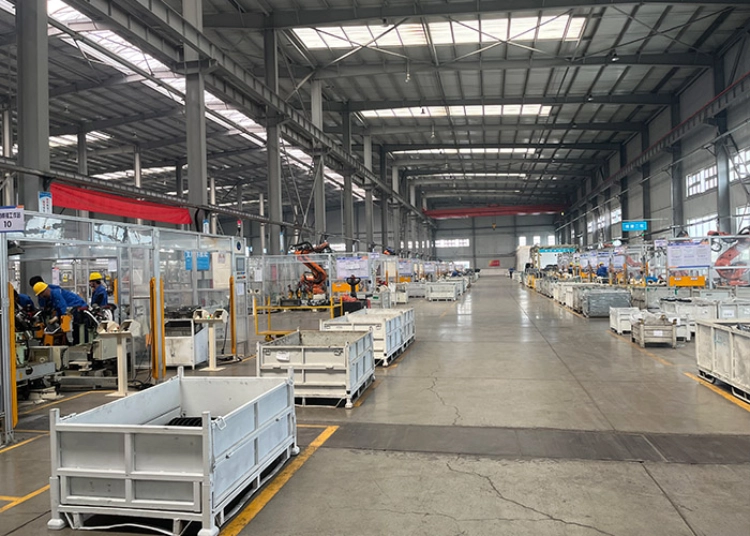
Look at a truck cab early on the assembly line. It is a welded shell and nothing else. No paint. No glass, no seats, no dashboard. Plant people call that shell the cab in white. Some say cab BIW. Term arguments bore me, honestly; the label matters less than the stage. Paint hides plenty. So does trim. Geometry hides nothing, ever.
Below I’ll go through what the term covers, how the shell is actually made, and the checks I would run before paying any supplier.
What ‘Cab in White’ Actually Means
Body in white is the standard industry phrase for a welded sheet metal structure, pre-paint, pre-trim. Apply it to a truck and the cab in white is what you are left holding. Floor pan. Walls and side frames welded on. Roof panel. Door shells. That welded-together box, bare metal, is the whole inventory.
Once paint goes on, or a harness snakes through, the white body label expires. What comes out the other end is the thing buyers call a complete cab assembly.
Names drift by region and by plant. Cab BIW. Cab body in white. Welded cab shell. Purchasing drawings often just print BIW. Same object every time.
What Sits Inside the Structure
Crash protection lives in this structure. Door openings get framed by the A pillars and B pillars. The floor ties into the side walls through crossmembers. Look near a seat belt anchor or the steering column mount and you will spot thicker steel, extra welds, reinforcement doing quiet work. Cab-over trucks add one more wrinkle: engine tilt mounts sit in the front wall, so a tolerance error there costs twice.
Steel grades follow the job. The safety cage takes high strength grades. Mild steel handles the big flat panels, since stiffness is all they owe you. Newer designs mix in tailored blanks and extra reinforcement; nice, but optional. What is not optional: the shell survives welding heat without wandering, then keeps its shape until the truck retires.
How a Cab in White Gets Built
Stamping first. Coils in, press strokes, out come floor pans and wall panels and roof skins. Then welding, which is where this whole thing gets won or lost.
Spot welding does most of the joining. Thousands of welds per shell, fired by robot guns against fixed jigs; robots hold position all shift, every shift, which a human welder cannot. Where spot does not fit, MIG or MAG steps in. Different materials meeting each other? Those joints get adhesive, sometimes self-piercing rivets.
Now the part brochures skip: fixtures. Panel-holding jigs quietly run the accuracy of everything downstream. Datum chosen badly at fixture design? The line then stamps that mistake, weld by weld, into every shell until somebody finally traces it home. We wrote a full note on how fixture datum selection affects cab body in white dimensional accuracy for exactly that reason.
Why Dimensional Accuracy Gets So Much Attention
Roof panel drifting a few millimetres? Visible from across the workshop. Door gaps wandering? Air leaks, water leaks, warranty claims. A wavy flange that looks minor on bare steel turns into a paint defect after e coating.
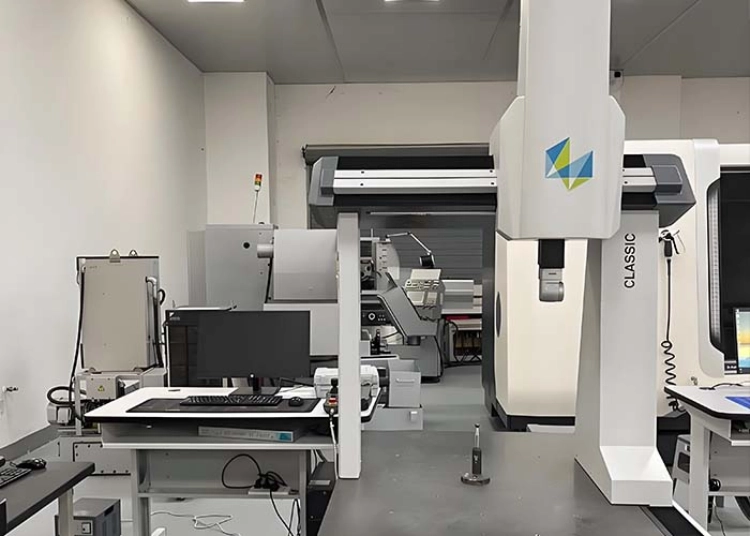
So serious plants measure. Fixture datum audits, CMM checks, laser scans on the critical sections, all before paint. Then the measuring repeats before final assembly, because trim and chassis tolerances stack on top. Catch the error at the bench; that is the whole game. Our checklists cover dimensional checks on a cab body in white before paint and also controlling cab body in white dimensions before final assembly.
Where a Supplier’s Track Record Shows
One question sorts the field fast: who do you already build cabs for?
Tairui’s answer goes back two decades. FOTON supply system, 2004. SAIC-GM-Wuling in 2008, Sinotruk in 2009. JAC arrived in 2016, Geely a year later, Great Wall in 2019, Dongfeng in 2020. Then 2022: the supporting systems of BMW China and Shaanxi Automobile heavy trucks. OEM audits do not get passed by accident.
The company itself dates to 2003, headquartered in Zhucheng, Shandong. Today: 4 R&D centers, 10 production bases across 8 provinces, 360,000 square meters, fixed assets of 1.52 billion yuan. For cab work the relevant kit is professional stamping lines, automated welding lines, plus an in-house mold processing center. In-house tooling means a modified cab does not wait on some outside toolmaker’s queue. The company profile has the full layout.
A Sourcing Checklist for Cab in White Buyers
Five checks, from watching which suppliers hold up and which do not:
- Datum scheme, in writing. How are the fixtures datumed? 2. Measurement reports per batch, not one per year. 3. Weld audit: spot weld maps, peel test records, electrode cap change logs. 4. Steel certificates for every coil entering the press shop. 5. Acceptance bands and measurement points agreed before shell number one, not after.
Hesitate on any of these and a supplier will hesitate somewhere else too. The quality assurance system page shows what a serious setup looks like; specific questions go through contact.
FAQ
What is the difference between a cab in white and a complete cab assembly?
Unpainted welded shell versus finished cab. The white body carries nothing fitted; the complete assembly adds paint, glass, wiring, trim and seats, ready for the chassis. White body quality caps everything after it.
Why is it called ‘in white’?
The name predates assembly lines. Coachbuilders painted bodies white before the final color went on. Timber follows the same old usage, unfinished wood being ‘in the white’. Today’s shells are gray steel and the name stuck anyway.
How many spot welds does a truck cab contain?
Thousands, though nobody honest quotes a single number; it moves with the design. Ask for the weld map instead. That is the document the weld audit gets checked against.
Can a supplier modify an existing cab design for my vehicle?
Usually, and the mold shop decides how smooth it goes. In-house mold processing means revised tooling gets cut directly, no outside queue. Tairui runs 4 R&D centers behind its mold shop and takes customized cab and body covering part projects straight from customer drawings.
Which certifications matter for cab manufacturing?
IATF 16949 is the baseline quality system, with ISO 14001 and ISO 45001 rounding out environment and safety. Tairui holds all three, plus CCC certification on its special vehicles. Check that certificate scope matches the products you are buying, not just the name on the door.